.webp)

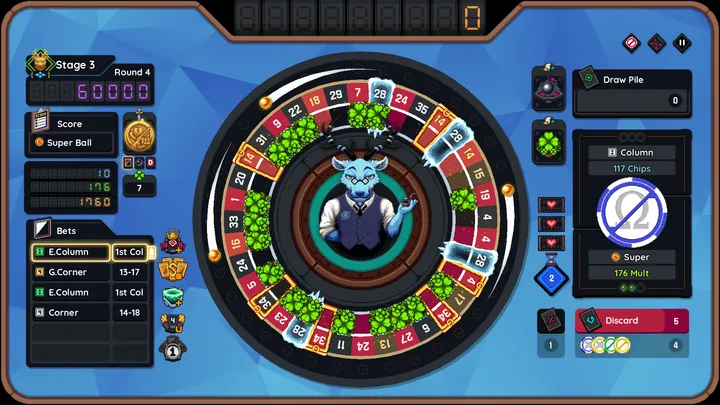
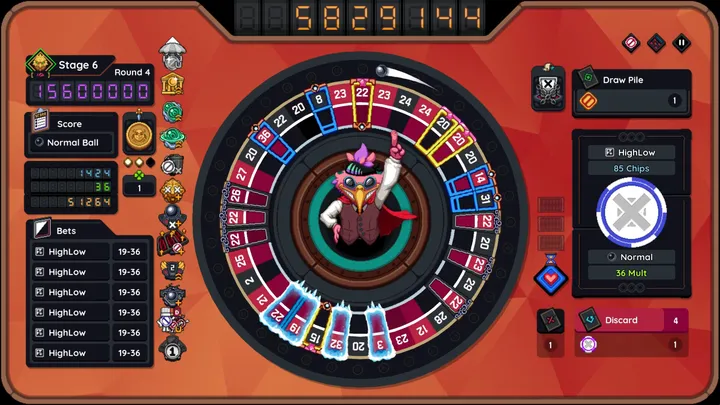
Bingle Bingle is one of the more unusual roguelikes released in recent years. Instead of building a deck of cards, commanding units, or manipulating dice, players gradually construct an increasingly complex roulette wheel. Numbers, colors, betting options, balls, badges, and class abilities can all be modified to create massive score multipliers and absurd chain reactions. The game essentially asks a simple question: what happens when roulette becomes a deckbuilder?
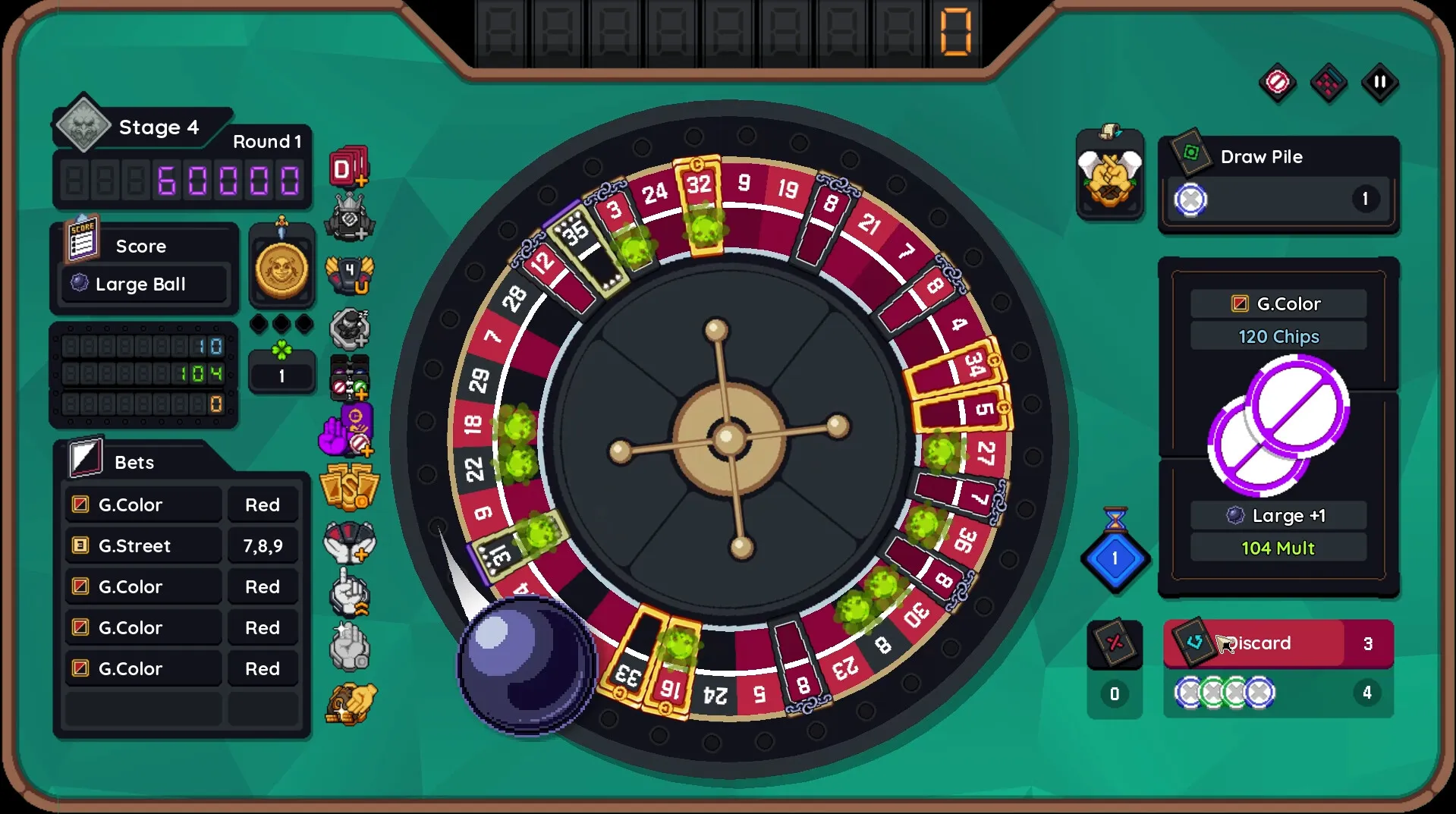
The answer is surprisingly compelling. Every run begins with a basic roulette wheel and a limited collection of bets. As players progress through rounds, they acquire additional mechanics capable of reshaping the wheel itself. Numbers can disappear, pockets can change colors, balls can gain special effects, and badges may multiply rewards exponentially. Eventually, a successful build can generate millions or even billions of chips from a single spin.
Yet beneath this entertaining chaos lies a design issue that becomes increasingly apparent after dozens of runs: Bingle Bingle often relies too heavily on highly specific synergies, causing many runs to feel predetermined by upgrade availability rather than strategic adaptation.
Unlike many roguelikes where players can salvage weak runs through tactical decisions, Bingle Bingle frequently asks players to commit to a narrow strategy early and hope that future rewards support it. When those pieces never arrive, entire builds can collapse despite otherwise efficient play.
This article examines the specific problem of synergy dependence in Bingle Bingle, analyzing how it emerges throughout a run, how it affects decision-making, and why it may become the game's greatest long-term balancing challenge.
1. A Brilliant Foundation: Roulette as a Roguelike System
At its core, Bingle Bingle transforms roulette from a passive gambling activity into an engine-building experience.
Players begin with:
- A standard roulette wheel
- A basic ball
- Limited betting opportunities
- Minimal passive bonuses
H3: The Appeal of Controlled Randomness
Traditional roulette offers almost no agency.
Bingle Bingle changes this by allowing players to manipulate nearly every variable.
They can modify:
- Pocket values
- Pocket colors
- Ball behavior
- Reward calculations
- Betting conditions
H4: Strategic Ownership
This immediately creates a satisfying feeling.
Players are not merely betting.
They are designing a machine.
That sense of ownership is arguably the game's greatest strength.
2. The Early Game Encourages Flexibility
During the first few rounds, almost every upgrade feels useful.
A simple badge increasing red payouts by twenty percent may provide immediate benefits.
A new ball type can slightly improve consistency.
Additional betting choices create alternative scoring paths.
H3: Open Decision Space
At this stage players can comfortably experiment.
They might pursue:
- Color-based strategies
- Number manipulation
- High-risk bets
- Ball-centric builds
H4: Adaptation Feels Rewarding
Small decisions matter.
No single component appears mandatory.
Even mediocre upgrades provide incremental value.
This creates the illusion that every run is recoverable.
Unfortunately, that illusion gradually disappears.
3. Midgame Synergies Begin to Dominate
As score requirements increase, incremental improvements become insufficient.
Players need explosive scaling.
H3: Linear Bonuses Stop Working
Suppose a round requires 50,000 chips.
A ten percent bonus is suddenly meaningless.
The player instead needs combinations capable of multiplying rewards several times over.
H4: Searching for Combo Pieces
Runs start revolving around specific interactions.
Examples include:
- A ball triggering repeated landings
- A badge duplicating certain colors
- Bets rewarding consecutive outcomes
- Wheels concentrating high-value numbers
Without these combinations, progress slows dramatically.
The game quietly shifts from experimentation toward dependency.
4. The Commitment Trap
One of Bingle Bingle's most interesting problems emerges when players partially commit to a strategy.
H3: The Half-Built Engine
Imagine receiving three upgrades benefiting black pockets.
Naturally, players continue investing in black-focused mechanics.
However, future rewards may offer:
- Green synergies
- Even-number bonuses
- Ball duplication effects
H4: Abandoning a Build Feels Terrible
At this point players face two poor choices.
Continue investing in an incomplete strategy.
Or abandon previous upgrades entirely.
Neither option feels satisfying.
A roguelike ideally rewards adaptation.
Bingle Bingle occasionally punishes it.
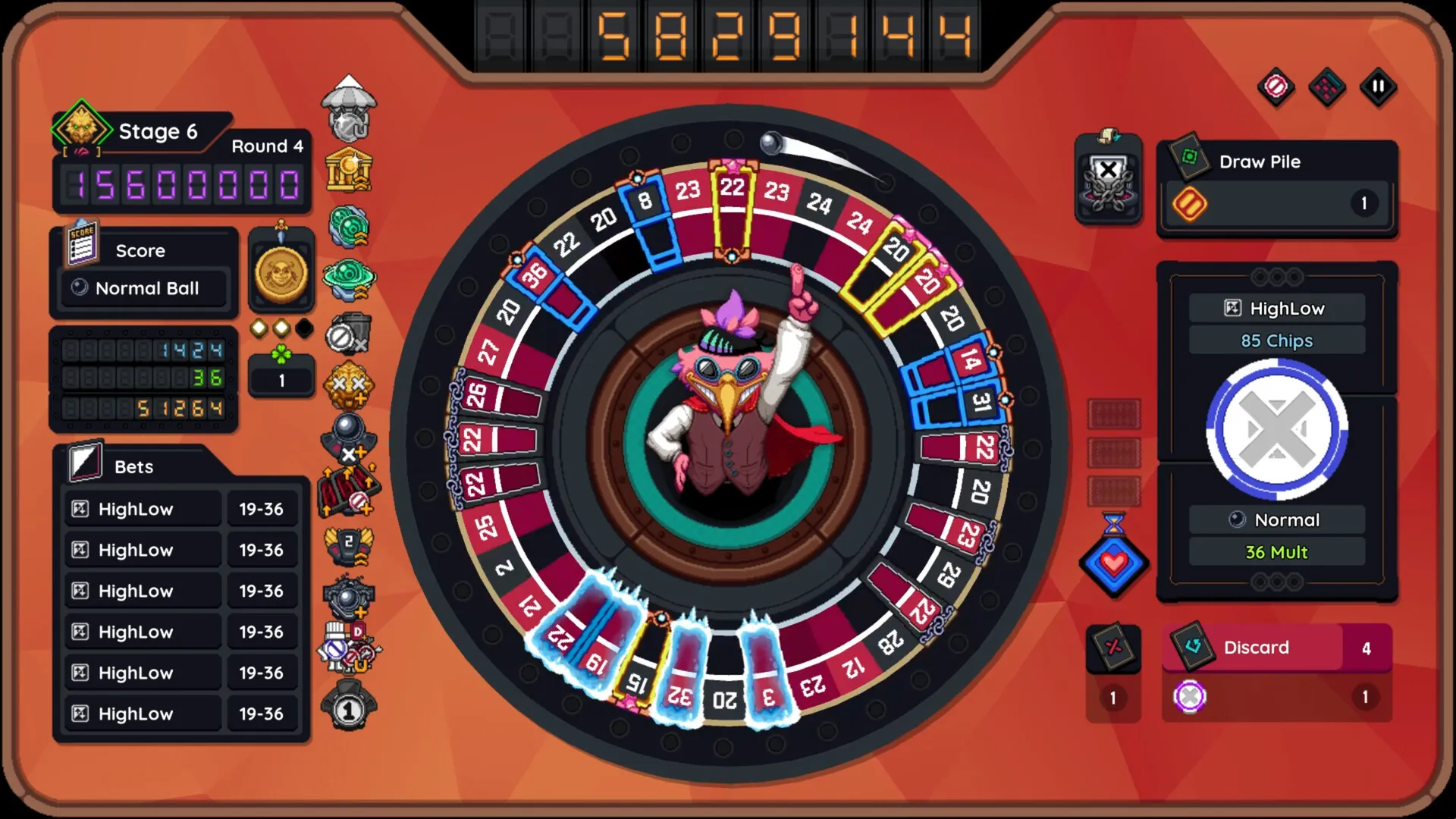
5. The Ball System Intensifies Dependency
Balls represent one of the most creative mechanics in the game.
There are more than ten types available, each interacting differently with the wheel.
H3: Balls Define Entire Runs
Some balls emphasize consistency.
Others prioritize chain reactions.
A few dramatically alter probability distributions.
H4: The Wrong Ball Can Kill Momentum
A build designed around repeated triggers becomes ineffective if players never encounter an appropriate ball.
Likewise:
- Duplication strategies require duplication balls
- Precision bets favor predictable balls
- Chaos builds benefit from random behavior
Ball availability therefore determines viability.
Instead of complementing builds, balls often dictate them.
6. Betting Options Become Mandatory Pieces
Bingle Bingle currently contains more than fifty betting options.
This large variety initially appears beneficial.
However, it introduces another layer of inconsistency.
H3: Bet Scarcity
Some strategies require highly specialized bets.
For example:
- Sequential number rewards
- Color stacking mechanics
- Odd-even multipliers
- Edge-pocket bonuses
H4: Dead Runs Become Common
If players never receive supporting bets, their strategy stagnates.
Runs begin feeling less like problem-solving exercises and more like lottery tickets.
A good roguelike should ask:
"How can I win with what I have?"
Bingle Bingle occasionally asks:
"Will the game let me win?"
7. Boss Modifiers Expose Structural Weaknesses
Boss encounters add temporary rule changes.
These encounters are intended to test flexibility.
Instead, they sometimes reveal how fragile certain builds truly are.
H3: Specialized Builds Collapse Easily
Consider a wheel designed around red pockets.
A boss reducing red effectiveness immediately cripples the entire strategy.
Similarly:
- Frozen pockets may disable movement builds
- Probability modifiers disrupt precision setups
- Penalties targeting repeated outcomes punish combo engines
H4: Planning Becomes Impossible
Bosses arrive unpredictably.
Players cannot reliably prepare.
List of common frustrations:
- Losing essential multipliers
- Having wheel layouts invalidated
- Watching billion-chip engines disappear instantly
- Facing modifiers with no counterplay
The result feels less strategic and more arbitrary.
8. Endless Mode Magnifies the Problem
Endless Mode should celebrate successful builds.
Instead, it often exposes their instability.
H3: Success Depends on Perfection
Normal runs tolerate imperfections.
Endless Mode does not.
Players need:
- Maximum scaling
- Reliable trigger frequency
- Exceptional probability control
H4: Only Elite Synergies Survive
Average combinations eventually fail.
Moderate bonuses become irrelevant.
Only highly optimized engines remain competitive.
Consequently, build diversity decreases significantly.
Players naturally gravitate toward the strongest combinations.
9. Comparison With Other Engine Builders
Bingle Bingle inevitably invites comparisons with other synergy-driven roguelikes.
H3: Adaptation in Successful Roguelikes
Many games provide fallback systems.
Examples include:
- Generic stat upgrades
- Flexible resource conversion
- Shops allowing targeted purchases
- Reroll opportunities
H4: Bingle Bingle Lacks Safety Nets
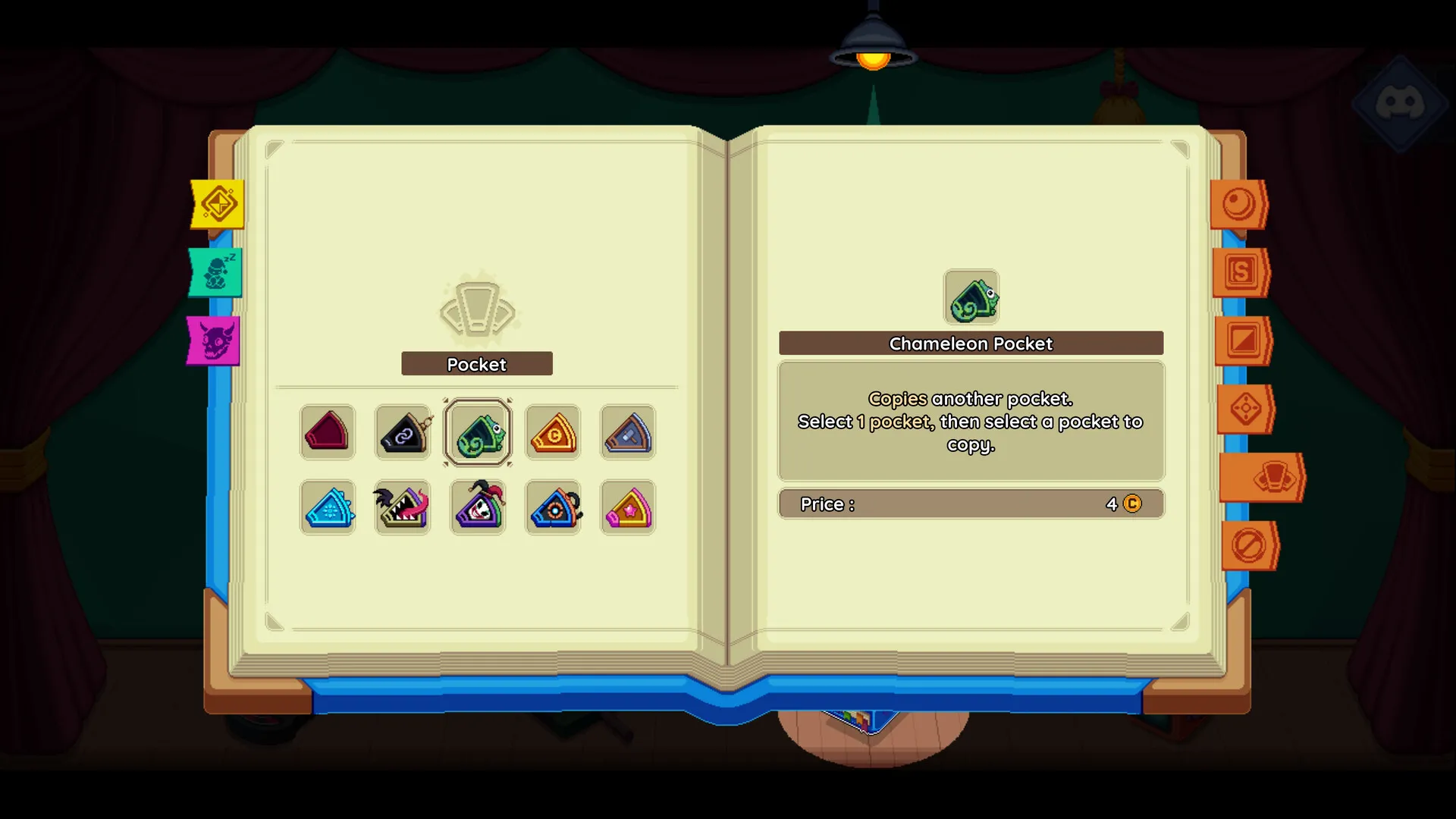
Bingle Bingle contains numerous powerful mechanics.
However, it offers relatively few ways to repair unlucky runs.
Possible improvements include:
- More selective upgrade pools
- Badge rerolls
- Ball exchanges
- Bet crafting mechanics
- Temporary wildcard effects
These systems would preserve randomness while reducing frustration.
10. Synergy Addiction and Player Psychology
Ironically, synergy dependence is also why many players love Bingle Bingle.
Creating a perfect roulette machine feels incredible.
Watching one spin generate billions of chips produces immense satisfaction.
H3: The Casino Mentality
Players begin chasing impossible combinations.
They remember spectacular victories.
They forget mediocre losses.
This creates a psychological loop remarkably similar to actual gambling.
H4: The Risk of Long-Term Fatigue
Over dozens of hours, however, patterns emerge.
Players recognize that success often depends on finding:
- Specific badges
- Specific bets
- Specific balls
- Specific wheel modifiers
When these pieces fail to appear, motivation declines.
The excitement of discovery transforms into disappointment.
The game remains enjoyable, but its strategic ceiling becomes narrower than it first appears.
Conclusion
Bingle Bingle succeeds because it transforms roulette into a surprisingly deep roguelike engine builder. Few games allow players to manipulate probabilities, redesign wheels, and construct absurd scoring machines with such creativity. The constant pursuit of increasingly ridiculous combinations gives the game a distinctive identity within the growing family of deckbuilder-inspired roguelikes.
Yet the same design philosophy that creates exhilarating moments also introduces significant weaknesses. As score thresholds rise, the importance of specific synergies increases dramatically. Players become dependent on particular badges, balls, and betting options, while many alternative paths gradually lose relevance.
The challenge for Bingle Bingle is not reducing randomness. Randomness is essential to its appeal. Instead, the game must ensure that players can meaningfully adapt when ideal combinations fail to appear.
A great roguelike does not guarantee perfect runs.
It guarantees that even imperfect runs remain interesting.
Bingle Bingle already has one of the most inventive foundations in the genre. Refining its dependence on narrow synergies may ultimately determine whether it becomes merely a fascinating experiment or a lasting classic among engine-building roguelikes.